£6,000 DRS Grant for Independent Retailers: What It Means and How to Get Ahead
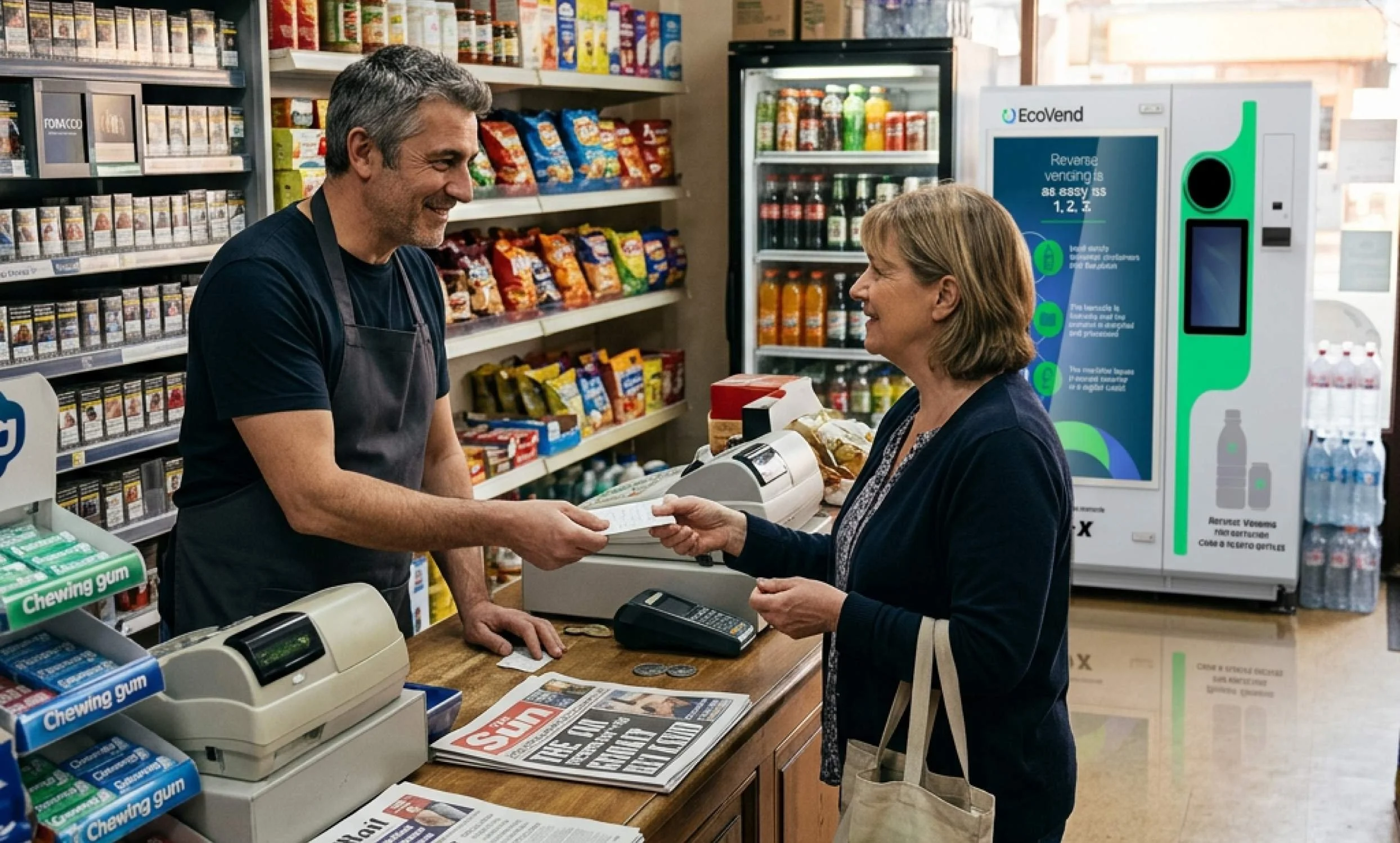
In April 2026, a significant piece of news landed for independent retailers across the UK. Exchange for Change, the organisation administering the Deposit Return Scheme, confirmed that £60 million in grant funding will be made available to help smaller shops install reverse vending machines ahead of the October 2027 launch.
That works out at up to £6,000 per site, paid as three annual instalments of £2,000.
If you run a convenience store, forecourt, newsagent, off-licence, or small independent supermarket, this funding is worth understanding now, not in 2027.
What Is the UK Deposit Return Scheme?
The UK Deposit Return Scheme (DRS) comes into force in October 2027 across England, Scotland, and Northern Ireland. When a customer buys a drink in a plastic bottle or aluminium can, a small deposit of around 20p is added at the point of sale. They get it back when they return the empty container to a designated return point, typically a reverse vending machine in or near a retail store.
Countries that already run a DRS, including Germany and Norway, report return rates of up to 98%. The UK is targeting 90% within three years of launch. Reverse vending machines are how that target gets reached.
What Is a Reverse Vending Machine?
A reverse vending machine (RVM) is an automated recycling machine that accepts empty drinks containers, scans and sorts them, and issues a deposit refund or reward to the customer. The process takes seconds. The customer feeds in their empty bottle or can, the machine scans and compacts it, and they receive their money back as a voucher, digital credit, or cash payment.
Modern RVMs process up to 45 containers per minute, work indoors or outdoors, and include real-time management software for tracking returns, monitoring performance, and displaying advertising content on built-in screens.
What Has Been Confirmed About the DRS Grant?
Exchange for Change has published details of a targeted grant scheme specifically for smaller independent retailers required to host a return point under the DRS scheme.
A total of £60 million has been ringfenced for grants over the first three years of the scheme.
Eligible retailers can receive up to £6,000 per site, structured as three annual payments of £2,000, with the first payment made approximately three months after installation.
This grant sits alongside the Return Handling Fee, the per-container payment retailers receive for processing returns. Final handling fee rates are still under consultation, with confirmation expected later in 2026.
The Association of Convenience Stores (ACS) welcomed the announcement while calling for the scheme to be cost neutral for retailers overall. Their position is clear: if the economics do not work for independent shops, fewer stores will participate and communities will lose convenient access to return points.
Who Qualifies for the Grant?
The grant is targeted at small, independent retailers where a reverse vending machine is the most appropriate solution based on expected container volumes at that location. On the question of exemptions, Exchange for Change has confirmed the following:
Stores with a sales area of 100 square metres or less in urban areas are automatically exempt, but can choose to participate voluntarily
Stores between 100 and 200 square metres can apply for an exemption based on space constraints or proximity to an alternative nearby return point
Stores above these thresholds will in most cases be required to participate
If your store falls into that last category, or if you want to get involved regardless, the grant provides a genuine financial opportunity worth pursuing sooner rather than later.
Why Independent Retailers Should Act Before 2027
October 2027 is not as far away as it sounds, and retailers who start the conversation now will be in a considerably stronger position than those who leave it until the last twelve months.
The Grant Pool Is Finite
A total of £60 million sounds substantial, but distributed across thousands of eligible sites nationally, demand will be real. Sites that plan ahead will be better placed to access funding before it becomes oversubscribed.
Installation Takes Time
As the DRS UK launch date approaches, demand for site surveys, machine installations, and engineer time will increase significantly. Getting ahead of that rush means a smoother process, better choice of machine specification, and more time to get staff and customers comfortable before the scheme goes live.
Early Movers Win the Footfall
Retailers with a reverse vending machine in place from day one will attract customers looking for a return point in their area. In locations with limited provision, that could drive meaningful footfall from the very first week of the scheme — and that customer habit, once formed, tends to stick.
The Commercial Case Beyond Compliance
Treating an RVM purely as a regulatory requirement undersells what it can do for a retail business.
Customers Come Back More Often
The deposit-return loop creates a natural reason for customers to visit regularly, independent of promotions or prices. They buy a drink, they return the container, they collect their deposit. That habit, repeated across your customer base, generates consistent footfall that is built into the scheme itself.
Your Machine Can Earn Advertising Revenue
Regen Enviro's machines feature large digital screens that can carry advertising from national or local brands, or promote your own products and offers. Regen can manage the advertising sales process on your behalf, with retailers receiving a share of revenue — an income stream that runs in the background without additional effort.
You Get Real Data on Your Customers
Every return is tracked through the management software, giving you real-time insight into what customers are buying and returning. That information feeds directly into smarter ranging and ordering decisions.
It Signals Something to Your Shoppers
Being the local store with a visible return point says something meaningful to a growing number of customers who factor sustainability into where they choose to spend. It gives you something concrete to point to, rather than a vague commitment to being greener.
How Regen Enviro Makes the Cost Work
Rather than purchasing a machine outright, retailers can access a Regen Enviro RVM through a flexible monthly lease. The £2,000 annual grant payment can be applied directly towards that lease, reducing your monthly cost and removing the need for any large upfront investment.
No Large Upfront Investment
The grant covers part of the lease. Regen Enviro covers the rest. You get a fully operational machine without needing to find significant capital before the scheme even launches.
Everything Is Taken Care Of
Regen covers delivery, installation, staff training, and ongoing maintenance as part of the package. Their comprehensive service option includes routine maintenance visits, repair call-outs, parts and labour, and full access to the smart management software platform.
The Machine Runs Itself
You do not need technical knowledge or a dedicated member of staff to manage it day to day. Once it is in and running, the system looks after itself — and Regen's team is on hand whenever you need support.
Which Types of Retailer Should Be Thinking About This?
Reverse vending machines suit a wide range of independent retail formats. Here are the sites where the case is strongest.
Convenience Stores and Corner Shops
The most natural fit. High footfall, regular drinks purchases, and a loyal local customer base. Many will be required to participate under DRS regardless, making early planning even more sensible.
Forecourts and Petrol Stations
Drivers buying drinks on the go are already in the habit of quick in-and-out visits. The deposit return loop maps well onto that behaviour, and a machine positioned near the entrance or exit can capture returns with minimal disruption to the customer journey.
Off-Licences
A high proportion of sales are exactly the containers DRS will cover. Return volumes at a busy off-licence could make the handling fee income genuinely significant over time.
Newsagents
Those with a chiller or drinks section sit in similar territory to convenience stores. A free site survey will quickly establish whether an RVM makes sense for your space and expected volumes.
Smaller Independent Supermarkets
Sites between 200 and 500 square metres will in many cases be required to participate. The grant and leasing model makes the economics considerably more manageable than going it alone.
What Happens Next
The Details Are Still Being Finalised
Final handling fee rates and full eligibility criteria will be confirmed ahead of the 2027 launch. The exemption policy is currently under review by regulators across England, Scotland, and Northern Ireland, with further details expected in the coming weeks.
The Direction of Travel Is Clear
The DRS UK launch is fixed. The funding is confirmed. The retailers who engage early will be better prepared, better supported, and better positioned than those who wait until everything is nailed down before making a move.
Turn your shop into a recycling hub before your competitors do.
Book a free site survey with Regen Enviro. We'll assess your space, walk you through the grant process, and show you exactly what's possible.